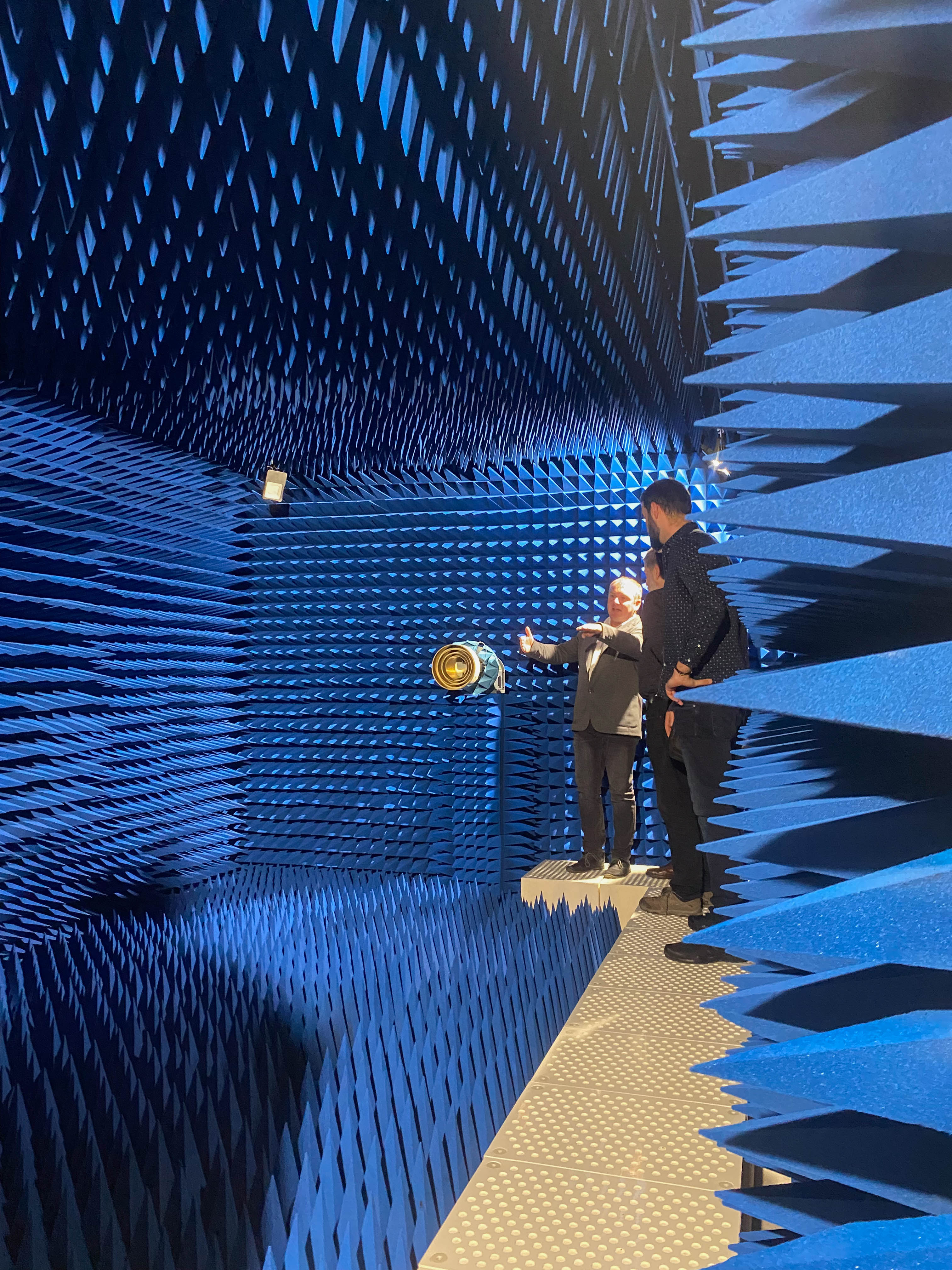
Its construction was supported by the REFRESH project, which brings new technologies and tools to support the transformation of the Moravian-Silesian Region. The laboratory is the first of its kind in northern and central Moravia. It consists of an anechoic chamber—one of the largest in the Czech Republic—which enables testing of real antenna properties and other radio systems without interference from external signals or reflections.
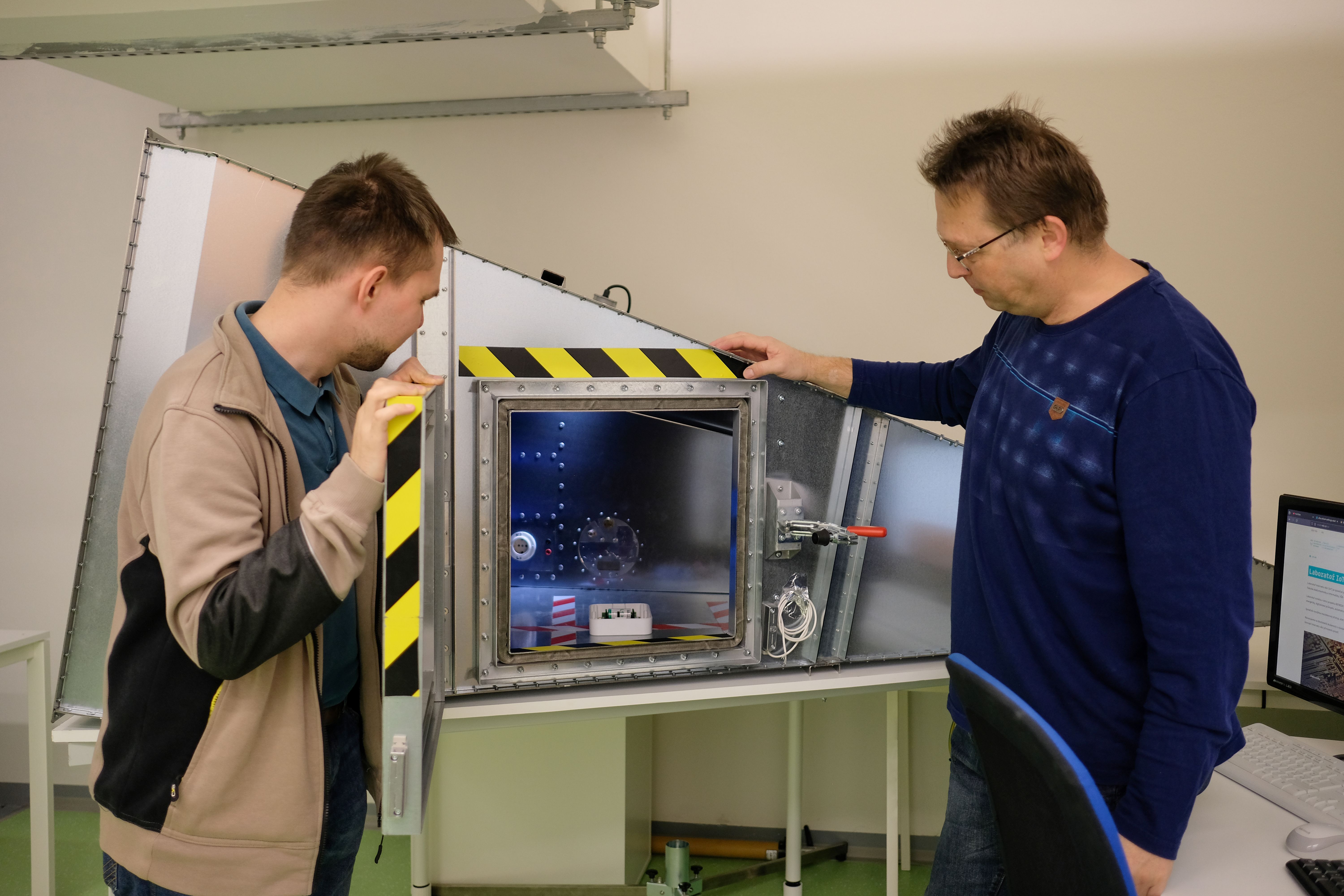
The second part is the electromagnetic compatibility (EMC) facility, which deals with a device’s ability to operate in an electromagnetic environment without causing interference to other devices and while being resistant to external disturbances. Because manufacturers closely monitor key parameters such as emitted interference and device immunity, experts in the new laboratory now have the systems necessary to perform these measurements.
“In the lab, we have a special GTEM cell that allows us to determine whether a device emits electromagnetic interference into its surroundings or, conversely, conducts interference through the cables it is connected with. We can perform these measurements across a wide frequency range from 150 kHz to 3 GHz. The equipment also includes a system for testing electrostatic discharges up to 30,000 volts. Thanks to this, we can reliably verify whether a device meets electromagnetic compatibility requirements according to current standards and whether it is safe and reliable in everyday operation,” explained Radovan Hájovský from FEECS.
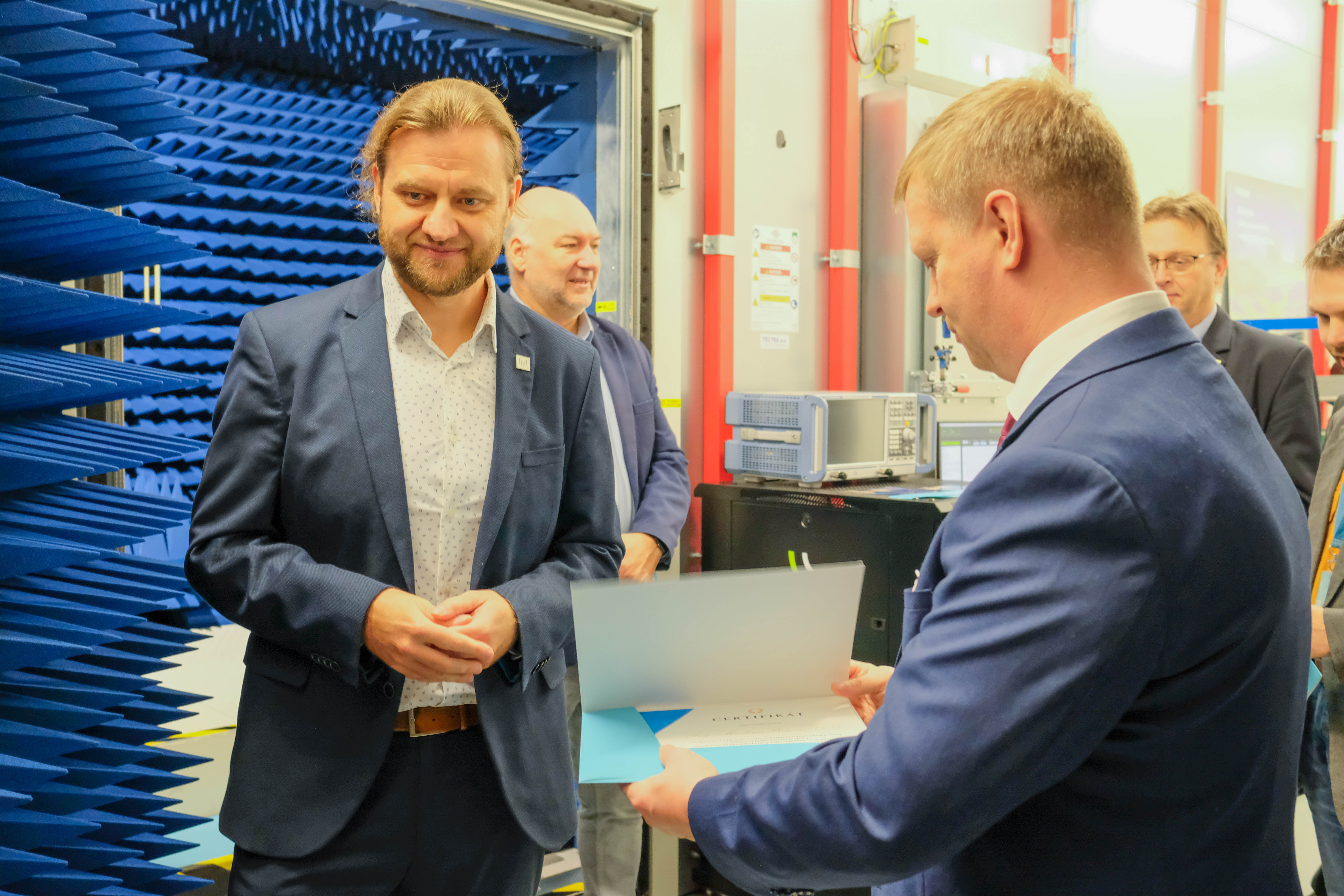
The new laboratory also expands research capabilities in the Internet of Things, 5G mobile networks, and in the future also 6G, where precise measurement and verification of antenna and radio system behaviour are essential. Modern technologies will enable research teams to test new procedures, develop advanced sensors, and verify their real-world performance in a controlled environment.
“We aim, among other things, to contribute to the development of quantum radar, a technology that could fundamentally change the way objects are detected—not only in security applications,” noted Marek Dvorský from FEECS.
The laboratory’s cutting-edge technical equipment will be used not only in research projects and industrial cooperation but also in student education. “We will use the laboratory for teaching, lab exercises, and in bachelor’s, master’s, and doctoral theses,” said FEECS Dean Radek Martinek.
The anechoic chamber and electromagnetic compatibility laboratory, worth nearly CZK 20 million, was created thanks to the REFRESH project from the Just Transition Operational Programme, which supports cutting-edge research and development, the growth of modern scientific infrastructure, and cooperation with industry and public administration. Its goal is to contribute to the transformation of the region towards being ‘smart and green’.